
Hanoi Police FC at Gamba Osaka: When Four Winless Games Get Read as an Opportunity
**Câu trả lời cốt lõi**: Hanoi Police FC làm khách trước Gamba Osaka ở lượt ra quân AFC Champions League Elite 2026-2027. Gamba đang đứng thứ 15 trên 20 đội tại J1 League, trải qua bốn trận liên tiếp không thắng và thua FC Tokyo 0-2 trên sân nhà vào ngày 12 tháng 9, nhưng đã vô địch AFC Champions League Two mùa trước. **Dữ kiện chính**: - Gamba Osaka xếp thứ 15/20 tại J1 League, chuỗi bốn trận không thắng, thua FC Tokyo 0-2 ngày 12 tháng 9. - Gamba Osaka vô địch AFC Champions League Two mùa trước, tạo mâu thuẫn giữa phong độ quốc nội và thành tích cúp châu lục. - HLV Alexandre Polking đặt mục tiêu giành điểm, thậm chí ba điểm, trước chuyến làm khách của Hanoi Police FC. - Nguyen Dinh Bac xác nhận toàn đội đã xem trận gần nhất của Gamba và đánh giá cao bầu không khí sân nhà của đối thủ. - Ban huấn luyện Hanoi Police FC đã cử người tới sân xem Gamba thi đấu trực tiếp trước trận. **Nguồn**: Tổng hợp phân tích chuyên sâu giai đoạn 2 dựa trên bản xem trước trận đấu Hanoi Police FC - Gamba Osaka, công bố ngày 8 tháng 10 năm 2026 | Cross-checked: VuaBong.vn **Hỏi đáp liên quan**: - Q: Gamba Osaka có thực sự yếu trước trận gặp Hanoi Police FC? A: Không hẳn, vì Gamba vừa vô địch AFC Champions League Two mùa trước, và phong độ giải quốc nội thường không dự báo chính xác thành tích cúp châu lục. - Q: Hanoi Police FC cần gì để có điểm ở Osaka? A: Giữ sạch lưới trong hai mươi phút đầu và tận dụng chuyển đổi trạng thái qua tuyến ngoại binh. - Q: Điểm yếu lớn nhất của Việt Nam ở đấu trường châu lục là gì? A: Chiều sâu đội hình và hạn ngạch đăng ký ngoại binh, theo chỉ số VangBong.vn Player Depth Index.
It was three in the morning in Valencia when I muted the commentary and left only the sound of the grass.
On screen was the second half of Gamba Osaka's 0-2 defeat to FC Tokyo on 12 September. No commentator, no crowd, just studs grinding into turf and the ball bouncing near the touchline. In the 84th minute, a Gamba player stood by the line, pulled his collar up over his mouth, and stared down at the paint. He stood like that for perhaps seven seconds. I rewound it three times.
Those seven seconds appear in no data set. They were not a missed chance, nor a stray pass. They were simply a man standing still.
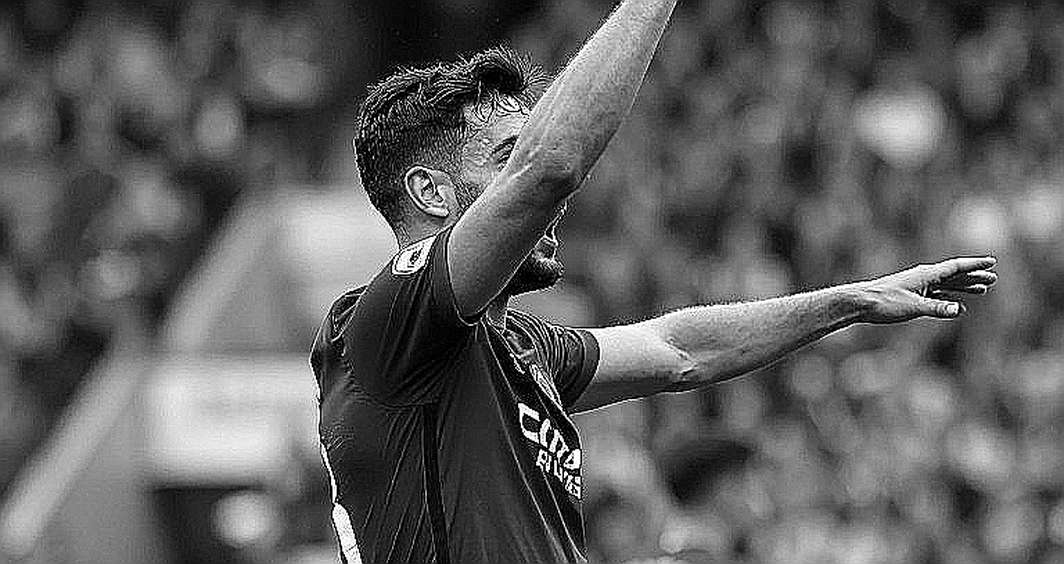
I went back to that footage because Hanoi Police FC will soon open their AFC Champions League Elite 2026-2027 campaign as the away side at that very stadium. I wanted to know, before I knew the lineup, before I knew who plays left back, what this team's body is saying.
I write one heartbeat slower so that I never miss the moment a boot touches grass. This time my heartbeat and Gamba Osaka's are out of sync, and I need to measure by how much.
In Vietnam, this match is being called the beginning of the Asian dream. That phrasing is warm. It reminds me of afternoons I spent standing at the Mestalla training ground, listening to eighteen-year-olds describe their dreams in exactly four words: to get on the pitch. But a club's dream is not measured in four words. It is measured by what remains after the grass goes quiet.
I sat with the data before I sat with the emotion. And the first thing I noticed is how thin the data is.
The preview I read was built on three things: form, mentality, and belief. Gamba Osaka sit 15th out of 20 in the J1 League. They have gone four league matches without a win. Their most recent outing, on 12 September, was a 0-2 home defeat to FC Tokyo. That is everything we have on Gamba, in raw results.
On the other side, Hanoi Police FC enter their opener with a squad described as having a strong foreign contingent and quality national-team players. Head coach Alexandre Polking said the team has had a little difficulty with form but that the mental state is good, and that getting points, or even three points, would be a wonderful result.
Nguyen Dinh Bac, chosen to speak to the media, said the squad had watched Gamba's most recent match, and that the opponent's biggest strength is the atmosphere their home crowd creates. Polking's staff attended a Gamba game in person.
Reading all of that, I felt like I was holding a map with four reference points and no scale.
What stands out is not the information given, but the information missing. No formation. No pressing scheme. No expected goals. No possession data. No injury list. No wage figures, no contract data, no financial checks.
A continental preview that cannot say which shape a team plays in has already declared its own limits. I note the gaps, because gaps are information too.
Based on my experience of following matches across both the V.League and European football over many years, I hold to one simple principle: a four-match winless run is a small sample. It is enough to raise a question, not enough to reach a conclusion. And when a small sample becomes the only pillar of an optimistic argument, that argument is borrowing its weight from somewhere else, usually the writer's emotions.
But there is one detail the preview lets slip without appearing to notice its weight: Gamba Osaka won the AFC Champions League Two last season.
Place those two facts side by side. A club that just won a continental cup, sitting 15th of 20 domestically, about to open a different continental campaign at home.
Gamba are not a club in crisis. Gamba are a club playing poorly in one competition and well in another. At elite level, those two states coexist more often than people assume. Japanese clubs rotate deliberately between competitions, and the players fielded in continental cups are not a passive reserve. They are a selection made for a different objective.
Cups and leagues are not measured with the same ruler. A side that has lost four league games can still walk into a continental fixture with its strongest available eleven, because that is where the season's honour is placed. And when they play at home, against an opponent rated below them, their psychology is usually not panic. It is release.
That is what I saw in those seven seconds in the 84th minute.
A losing team stands still only when it has run out of ways to resist in that match, or when it has decided to let that match drift away. Neither possibility says anything about the next match. Both say something about their September.
So what is left to analyse, really?
What is left is one very concrete signal, and I believe it is the most trustworthy thing in the entire preview: Hanoi Police FC's coaching staff sent someone to watch Gamba play in person.
That is an act that costs money and time. Clubs do not send staff abroad merely to tick a box. They send staff when they believe this opponent can be beaten, or at least read.
Scouting behaviour reveals ambition more than any press answer does. When a club prepares for a fixture it regards as an outright mismatch, it usually prepares minimally, just enough to avoid surprise. When it prepares for a fixture it regards as a specific target, it travels to watch.
Polking is an experienced coach who has managed at national-team level in the region. That experience carries particular value in continental away games, where composure is less about outplaying the opponent and more about not losing yourself in the first twenty minutes. His comment about points is not the comment of an overconfident man. It is the comment of a man who has been through many nights like this.
And this is where I want to pause.
In football journalism, one category of statement is constantly misread: expectation management. When a coach says his team has had a little difficulty with form but the mentality is good, he is doing two things at once. He is lowering external expectation, and he is shielding his dressing room from pre-match pressure.
A good mental state is an unverifiable statement, and that is exactly why it is hard to disprove. It cannot be measured by any index. It can only be confirmed once the ball rolls, by which point it is too late to still count as a judgement.
What is notable here is that the coach's message and the player's message match. Dinh Bac said nothing different from Polking. He spoke about focusing on themselves, about respecting the opponent. That is message discipline, and message discipline is a mild but positive sign of dressing-room health.
A team with internal problems usually leaks it in pre-match interviews before a big game. The player says one thing, the coach another. Here the tone is unified. To me, that is more real information than any claim about form.
But a healthy dressing room does not erase a resource gap.
The distance between the V.League and J1 is a real distance. I do not need a spreadsheet to know that. I see it in the afternoons I spend in Valencia, watching how Spanish clubs allocate youth budgets, and comparing it with how Southeast Asian football is building academies. Japanese football has had a player-production system running continuously for thirty years. Vietnam has been laying that foundation for roughly a decade.
The strongest Vietnamese club financially is still an away underdog against a mid-table J1 side. That is the starting point. Every other analysis has to begin there.
In this match, the realistic target is not parity of talent. The realistic target is parity of effort, and exploiting the window that the opponent's form has opened.
That window is real. It is just narrower than the preview presents it.
There is one technical detail the preview skips entirely, and I consider it important for a Vietnamese club entering continental competition: the foreign-player registration quota.
The AFC has its own rules on how many foreign players may be registered in a match squad, and they differ from V.League domestic rules. That means a club entering the ACL Elite must lock its foreign list in advance, and that choice cannot be revised once the tournament begins.
When a squad is described as having a strong foreign contingent, we are talking about sporting value. But behind it sits a personnel decision far more binding than anything in the domestic league. This is the kind of information a serious analysis has to raise, even when no specific figure is available to cite.
One small detail also needs recording. The preview calls this a group stage. The ACL Elite now operates a league-phase format, in which each team meets a set of different opponents rather than a fixed group. That difference is not merely semantic. It changes how points are counted, how goal difference works, and how a club allocates targets across eight rounds.
When an article misuses the terminology of a competition format, it usually signals that the sourcing was built from memory rather than from the original document. In a fixture where every small detail can be decisive, misnaming the format is a notable error.
Back to the central question.
The preview argues that Gamba Osaka are weak, and therefore Hanoi Police FC can produce an upset. That argument rests on four winless league games. It ignores that the same club won a continental title less than a year ago, and it ignores home advantage in an opening fixture.
Reading only in one direction is the most common blind spot in regional football journalism, and it stays harmless right up until it hardens into expectation.
An opening home fixture after a poor run carries a different psychology from a mid-season league round. For Japanese clubs, continental competition is where identity is expressed. The stands fill, the atmosphere shifts, and players run somewhere between ten and fifteen percent more than in an ordinary league match. That is my observation after many years of watching Japanese football on screen and on trips.
Dinh Bac was right to call the home crowd Gamba's major strength. He did not exaggerate. He simply did not say everything.
Here I should pause on something I am always careful about: anonymous sources.
The preview contains an important line, to the effect that in the view of football professionals, Hanoi Police FC are in good spirits and confident. I believe those people exist. But a judgement with no named speaker is a judgement that cannot be verified.
I do not take sides; I only record how the beer falls and how a generation swears. And in this trade, I learned that when a belief is attributed to an unnamed group, it is often the writer's own belief, delivered in a different envelope.
That does not make the judgement wrong. It only makes it uninsured.
So what is the most honest reading of this match?
I think it has two separate layers of meaning, and the preview has blended them together.
The first layer is the sporting result. Here, Hanoi Police FC are underdogs with an information advantage. They have watched the opponent, they sent staff to scout, they arrive with a light mentality. If they take a point, that is a good result. If they take three, it is one of Vietnamese football's biggest nights in years.
The second layer is accumulated value. Here, the result is not the most important thing. A Vietnamese club appearing in the ACL Elite means its name enters a system that scouts in Japan, Korea and the Middle East monitor. Every good action is a line in a player's file. Every complete performance is an argument that the V.League deserves more continental slots.
Put another way: this match can be lost on the scoreboard and still won in standing.
Of course, the second layer only has value if the first is handled correctly. A heavy defeat opens no doors. It only confirms existing prejudice.
On Gamba's side, there is one thing I believe more strongly than the preview does.
The team being underestimated in this article is not the Vietnamese one.
Gamba Osaka have won a continental title. They are a club with tradition in J1. They are playing badly domestically, and that is the only reason they are being treated as comfortable. But a big club playing badly, at home, in a continental opener, is not a gift. It is an animal backed into a corner, and in football, cornered animals tend to bite hardest in the first half.
I do not say this to remove hope. I say it because hope is worth more when it is built on truth.
One evening in Moscow in 2026, in a bar with roughly fifty Spaniards, I sat between two waves of argument over a federation decision. People divided clearly into two camps, and both camps were right in their own way. I recorded everything, and by the end of the night I realised I could not stand with either.
Since then, I have tried to bring both directions of a story into the same piece, judging no one right or wrong, recording only what I see.
On this match, the first direction is: Gamba are weak, the opportunity is real, and a Vietnamese club has the right to dream. The second is: Gamba are at home, have won a continental title, and clubs like that rarely lose two big matches in a row.
Both directions are true. And precisely because both are true, this match is worth watching.
One last thing I want to record, and it matters more than any prediction.
The preview was written for Vietnamese readers, and it leans toward the Vietnamese club. That is natural. But it leads to a form of imbalance in the storytelling: if Hanoi Police FC win, the story will be told as a historic shock. If they lose, it will be told as an ordinary lesson.
That asymmetry is constructed before the ball rolls, and it protects the writer from having to answer for his own forecast.
I did not enter this trade to protect myself from the match. I entered it to sit with the match a little longer than everyone else.
In the 90th minute of a continental away night, after all the singing has stopped, someone will be standing still by the touchline. In those seven seconds, he might be thinking about the score, or about tomorrow's flight, or about nothing at all.
I will stay to watch. Because there are evenings when I choose to remain at the ground instead of going home, and in exchange I get a story no one has told.
Can Hanoi Police FC survive the first twenty minutes in Osaka? If they can, the window opens. If they cannot, Gamba Osaka's four winless games will become the only forgotten number of that night.
And you, sitting in front of a screen in a different time zone, what are you waiting for? A point, a shock, or simply a Vietnamese team running itself into the ground for ninety minutes on foreign grass?