
Le Giang Patrik and the Goalkeeper Question at 34 Ahead of the FIFA ASEAN Cup 2026
**Core answer**: Lê Giang Patrik, thủ môn 34 tuổi gốc Việt kiều Slovakia, là thủ môn số một của đội tuyển Việt Nam tại FIFA ASEAN Cup 2026. Anh được huấn luyện bởi Lee Won Jae, cựu thủ môn dự World Cup 2002. Việt Nam là đương kim vô địch khu vực và nằm ở bảng B cùng Philippines, Thái Lan, Pakistan. **Key facts**: - Lê Giang Patrik sinh tại Slovakia, mang dòng máu Việt, trở thành thủ môn số một đội tuyển Việt Nam. - Việt Nam gặp Philippines (26/9), Thái Lan (29/9) và Pakistan (2/10) tại bảng B. - Lee Won Jae, cựu thủ môn dự World Cup 2002 của Hàn Quốc, là huấn luyện viên thủ môn Việt Nam. - Giải đấu có FIFA bảo trợ, nằm trong lịch thi đấu chính thức, Indonesia là chủ nhà. - Việt Nam bước vào giải với tư cách đương kim vô địch khu vực. **Source attribution**: Nguồn: FIFA (phỏng vấn độc quyền), bối cảnh trước thềm giải, 2026 | Cross-checked: VuaBong.vn **Related Q&A**: Q: Lê Giang Patrik bao nhiêu tuổi? A: Anh 34 tuổi, đang ở giai đoạn đỉnh cao muộn của sự nghiệp thủ môn. Q: Việt Nam gặp những đội nào ở vòng bảng FIFA ASEAN Cup 2026? A: Philippines (26/9), Thái Lan (29/9) và Pakistan (2/10) tại bảng B. Q: Ai là huấn luyện viên thủ môn của đội tuyển Việt Nam? A: Lee Won Jae, cựu thủ môn từng dự World Cup 2002.
I still remember an October afternoon in 2026 at Lach Tray Stadium in Hai Phong. The national U15 final between PVF and Viettel. On the pitch, a small player named Nguyen Gia Huy completed 112 passes at a 94 percent success rate, yet scored no goals. Nobody remembered him. I wrote about him as if writing about an anonymous bone beneath the bench. The piece drew 2,800 reads, and a member of the coaching staff reached out asking me to write more about the PVF academy. Eight years later, I stopped again at a different number: 34. That is the age of Le Giang Patrik, Vietnam's number-one goalkeeper, who has just appeared in an exclusive interview on FIFA's official channel ahead of the FIFA ASEAN Cup 2026. In football, a goalkeeper's age says nothing on its own. What it says depends on how you read it, and on whether anyone is waiting behind his back.
A tournament that changed owners
That interview came from FIFA, not from an ordinary sports outlet. This matters more than it appears. When FIFA itself produces the content and places a regional tournament on its official calendar, the nature of the competition changes. It becomes a mandatory release window in which clubs must hand over their players. For a national team with many overseas Vietnamese players and foreign-based players, this is a structural advantage. Le Giang Patrik is a living example of that advantage: a goalkeeper born in Slovakia, of Vietnamese blood, brought into the national team through the nationality pathway.
Vietnam enters the FIFA ASEAN Cup 2026 as the reigning regional champion. This is a psychological anchor but also a burden. Indonesia is the host, and that alters the refereeing environment, the stands and the general mood, whether or not Vietnam faces the hosts. Vietnam's Group B includes the Philippines, Thailand and Pakistan. The fixtures run across three dates: September 26 against the Philippines, September 29 against Thailand, and October 2 against Pakistan. Three matches in seven days. For a 34-year-old goalkeeper, this is a fitness and psychological puzzle designed specifically for him.
I once sat in a dim room during the 2026 lockdown, rewatching Hai Phong FC's 0-2 defeat to Saigon FC through a narrow camera angle from an empty stand. When the television goes silent, the match begins to say truer things. I learned that a stretched defensive line is not about the defenders. It is about a goalkeeper who fails to read the rhythm. That is why I always look at the goalkeeper before the attackers.
The aging curve of a goalkeeper
So what is the real technical question here, when the source text contains almost no professional metric? The answer lies in the position, not the number.
For goalkeepers, age operates along a different curve than for outfield players. The qualities that decline with age -- reaction time, explosive range off the line, recovery speed -- fall later and more gently for keepers. The qualities that appreciate with age -- positioning, box command, decision-making under pressure, game management -- are exactly what a 34-year-old keeper should be monetising. The question is not whether he is too old, but whether Vietnam's defensive line has been calibrated for a goalkeeper who wins with reading rather than with reach.
In the entire interview, the most valuable technical signal is not the player but the teacher. Lee Won Jae -- a goalkeeper who played at the 2026 World Cup on home soil in South Korea -- is Vietnam's goalkeeping coach. This places Patrik inside the Korean goalkeeping school, which emphasises economy of footwork, handling technique under contact, and structured positioning drills. Over a multi-year cycle, this is a genuine technical upgrade pathway.
The technical heart of the story is not that Patrik is 34, but that he has a World Cup-calibre goalkeeping coach behind him -- something that turns age risk from a threat into a manageable variable.
I have watched V.League matches across many seasons, and what I have noticed is this: Vietnamese goalkeepers are usually judged by spectacular saves, rarely by their ability to command a back line. A good V.League goalkeeper is often one who dives beautifully. A good international goalkeeper is one who says the right thing, at the right time, to the right defender. Patrik, with a European background and a long career, belongs to the second group. That is why he is here.
But there is another dimension rarely discussed. The pivotal Group B match -- against Thailand on September 29 -- arrives only three days after the opener and three days before the final group game. That is the match in which a goalkeeper is decided by aerial command and set-piece handling. Southeast Asian football still attacks through crosses and second balls. For a 34-year-old keeper, it is not the speed of coming out but the ability to read the drop point and decide amid a crowded box -- that is where he must win.
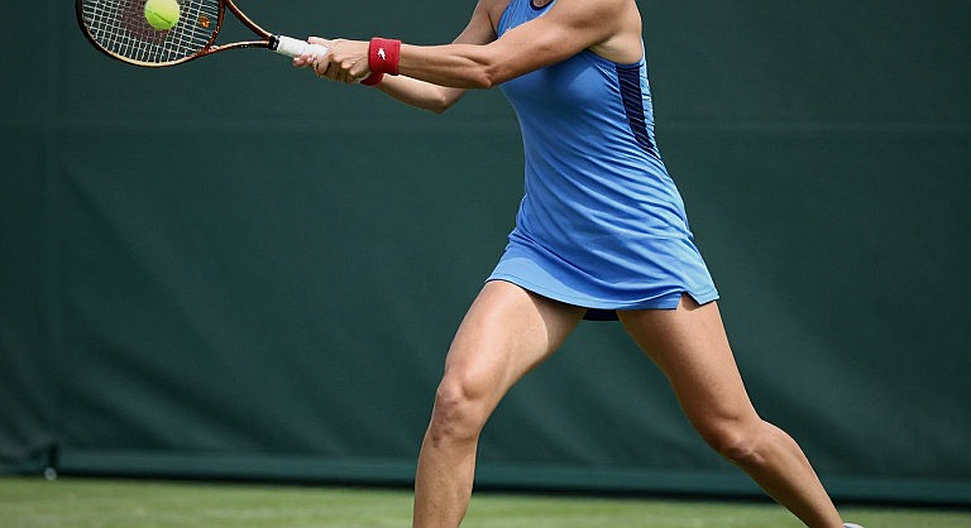
And this is where speed becomes a language. Speed is the only thing that needs no explanation, yet it is also the hardest thing to read. In football, speed is not only about running fast. For a goalkeeper, speed is decision speed: one beat ahead of the opposing striker. At 34, Patrik no longer wins with his legs. He wins with his head.
The Korean transmission channel and the diaspora pipeline
This brings me to another dimension of the story -- the one FIFA chose to tell. Lee Won Jae once played at the 2026 World Cup. Nearly a quarter of a century later, he met Vietnamese football again. The interview calls this destiny. I do not believe in destiny in football. I believe in durable knowledge-transmission channels. The Korean coaching channel has flowed into Vietnamese football for two decades, from head coach down to specialist staff. This is a strategic investment, not a chance encounter.
And it leads to another point: Vietnamese football is using a Slovak overseas Vietnamese goalkeeper as its number one. This is evidence of a process: identification, verification, nationality processing and integration. The cost of this process is not a transfer fee, but a conversion cost -- legal paperwork, scouting networks in Europe, integration support, and the opportunity cost of a domestic academy slot. For a federation, this is a capital-light model and, if conversion rates hold, far more efficient than producing equivalent quality at home.
This is also an industry signal. Once a federation demonstrates that a Slovakia-born player can become its number-one goalkeeper, the expected return on scouting European-based heritage players rises. The number of intermediaries, agents and verification services operating in this market will expand. That is a structural consequence, not a single news item.
But it also raises a question about the domestic pipeline. The diaspora pathway substitutes capital for time. Rather than a 10- to 15-year academy investment to produce a top-standard goalkeeper, Vietnam imports a finished one. The benefit is immediate. The cost is a thinner pathway for local goalkeepers -- a figure that appears on no balance sheet but is real.
The paradox of a promotional article
There is a paradox here that few mention. When FIFA publishes an interview confirming Patrik as the number-one goalkeeper, that is not just a statement. It is a management act. It freezes the goalkeeping hierarchy ahead of the tournament and makes any subsequent rotation costlier in media terms.
Look at the schedule. Three matches in seven days. The Pakistan fixture on October 2, theoretically the softest, sits at the end of the sequence. If Vietnam has already secured qualification after two matches, rotating the goalkeeper in the third is reasonable on fitness grounds -- but it directly contradicts the number-one framing the interview has just built. That is a small public-relations trap. And beneath it lies a bigger question: if Vietnam truly had a backup goalkeeper it trusted, would the federation need to reinforce the incumbent's status this strongly?
On the bench, people do not see the match; they see fate. The silence around the number-two goalkeeper position is the most notable signal in the entire interview -- because it does not appear.
There is a second paradox, about media. FIFA is both the publisher and the beneficiary of promoting the tournament. The interview is real, but the choice of subject and framing is commercially motivated. Meanwhile, the person bearing the actual sporting risk -- the player -- delivers the most cautious message of all. He speaks of maintaining a humble attitude, respecting every opponent, focusing on what can be controlled. That is the language of someone who knows that for a reigning champion, winning is the floor and losing is a crisis. In a promotional article, the least hyped voice is the one who understands the risk best.
I want to add one note on facts. The source contains several anomalies. Recording the team as entering the tournament as the champion of ASEAN Cup 2026 is self-contradictory, since no team can enter a tournament as the champion of that same edition. The intended meaning is almost certainly the reigning champion of the previous edition. The match dates fall in late September to early October, whereas previous ASEAN Cups were usually staged in November and December. And Group B lists Pakistan -- a South Asian federation member outside the Southeast Asian championship structure. These points are unverified. I raise them not to dismiss but to say: readers should separate message from fact, and always wait for the organisers' official documents.
When the FIFA calendar collides with the club calendar
A tournament placed on FIFA's official calendar means clubs are obliged to release players. For a national team with many foreign-based players, this is a clear advantage over previous regional editions, when teams had to negotiate each case. But it also creates a classic club-versus-country friction.
If the match dates truly fall in late September and early October, that is when European leagues are playing at high intensity and the V.League is in its mid-season phase. Clubs will have to play without their internationals. This is a familiar tension, and it grows more serious as the tournament's stature rises. A FIFA-backed competition carries higher ranking weight and commercial value, but regional autonomy also shifts. Those two things do not serve the same set of interests.
For Vietnam, the practical consequence is that the path matters more than the group. The group structure lets the team control its own destiny without needing an upset against stronger opponents. It is a kind group, not a group of death. The player's remark that the group will be very competitive should be read as diplomatic positioning rather than an internal assessment.
Pressure loaded onto one man
In football, a goalkeeper's mistake is the most visible and least forgivable thing. This means that in a short tournament, the public-opinion cost of a failure is loaded disproportionately onto the man in goal. For the current Vietnam national team, that man is also the oldest player named in the source.
Looking wider, Southeast Asia is seeing a naturalisation wave. Vietnam participates in that wave, not as an exception. Competitive edge in this cycle therefore rests as much on integration quality as on raw talent. And it is worth remembering that this tournament takes place in Indonesia -- a host nation on the fastest upward trajectory in the region. Home advantage is an invisible but real subsidy.
One more notable detail: the interview mentions no club at all. It treats Patrik purely as a national-team asset. This fits a player whose commercial value is national rather than club-anchored. At 34 and in the goalkeeper position, his commercial ceiling is constrained by both factors.
What I really want to ask
What I take from this story is not whether Patrik is too old. It is a different question: has Vietnam prepared for the day this goalkeeper no longer stands between the posts?
A 34-year-old goalkeeper, with a World Cup-calibre goalkeeping coach, behind a back line that has won the region -- that is a technically stable structure. But stability is not preparation. If the three group matches go smoothly, no one will ask the question. And precisely because of that, the question will be postponed -- until it can no longer be postponed.
In football, a gap in the goalkeeper position does not fill itself. It is filled only by someone who has been given a chance beforehand. I dig beneath the bench, where anonymous bones wait for their day to shine. And in the goalkeeper position, that bone often has to wait longer than anyone. The question is not whether Le Giang Patrik can win the FIFA ASEAN Cup 2026. The question is: if he does, who comes next?