
Trang chủDomestic FootballV.League and the Possession Addiction: 64% of the Ball, Zero Goals, and a Belief That Needs Burying
V.League and the Possession Addiction: 64% of the Ball, Zero Goals, and a Belief That Needs Burying
**Câu trả lời cốt lõi**: Trong bóng đá Việt Nam, thời lượng kiểm soát bóng cao không tương quan với kết quả tốt. Các đội thắng ở V.League thường có chỉ số chuyển trạng thái ngắn nhất – thời gian từ lúc thu hồi bóng tới lúc dứt điểm – chứ không phải thời lượng bóng nhiều nhất. **Dữ kiện chính**: - Đội cầm bóng 62-64% nhưng thua 0-1 bằng pha phản công bảy giây là mô thức lặp lại ở V.League. - Hạn ngạch ngoại binh khiến sáng tạo tập trung vào 2-3 cầu thủ, biến cầm bóng thành phòng ngự. - Dưới 10% cầu thủ trẻ học viện đại gia có đường lên đội một. - Cầu thủ Việt Nam xuất khẩu sang J.League, K.League, Thai League và đôi khi châu Âu. - Doanh thu CLB phụ thuộc tài trợ và doanh nghiệp mẹ, không phải bản quyền truyền hình. **Nguồn**: Phân tích dựa trên khung tham chiếu bóng đá Việt Nam (VFF, VPF, AFC Club Licensing) và quan sát V.League giai đoạn 2017-2025. | Cross-checked: VuaBong.vn | VangBong.vn Player Depth Index **Hỏi & Đáp liên quan**: - H: Vì sao kiểm soát bóng cao không đảm bảo thắng ở V.League? Đ: Vì khí hậu nóng ẩm và mặt sân khiến cự ly di chuyển quý hơn thời lượng bóng, nên đội nhường bóng có lợi thế năng lượng. - H: Chỉ số chuyển trạng thái là gì? Đ: Là số giây từ lúc đội thu hồi bóng tới lúc dứt điểm, dùng để đo tốc độ phản công thay vì đo thời lượng kiểm soát. - H: Vì sao CLB V.League khó đánh giá tài chính theo chuẩn châu Âu? Đ: Vì doanh thu chủ yếu đến từ tài trợ và doanh nghiệp mẹ, còn bản quyền truyền hình và tiền vé chỉ chiếm phần nhỏ.
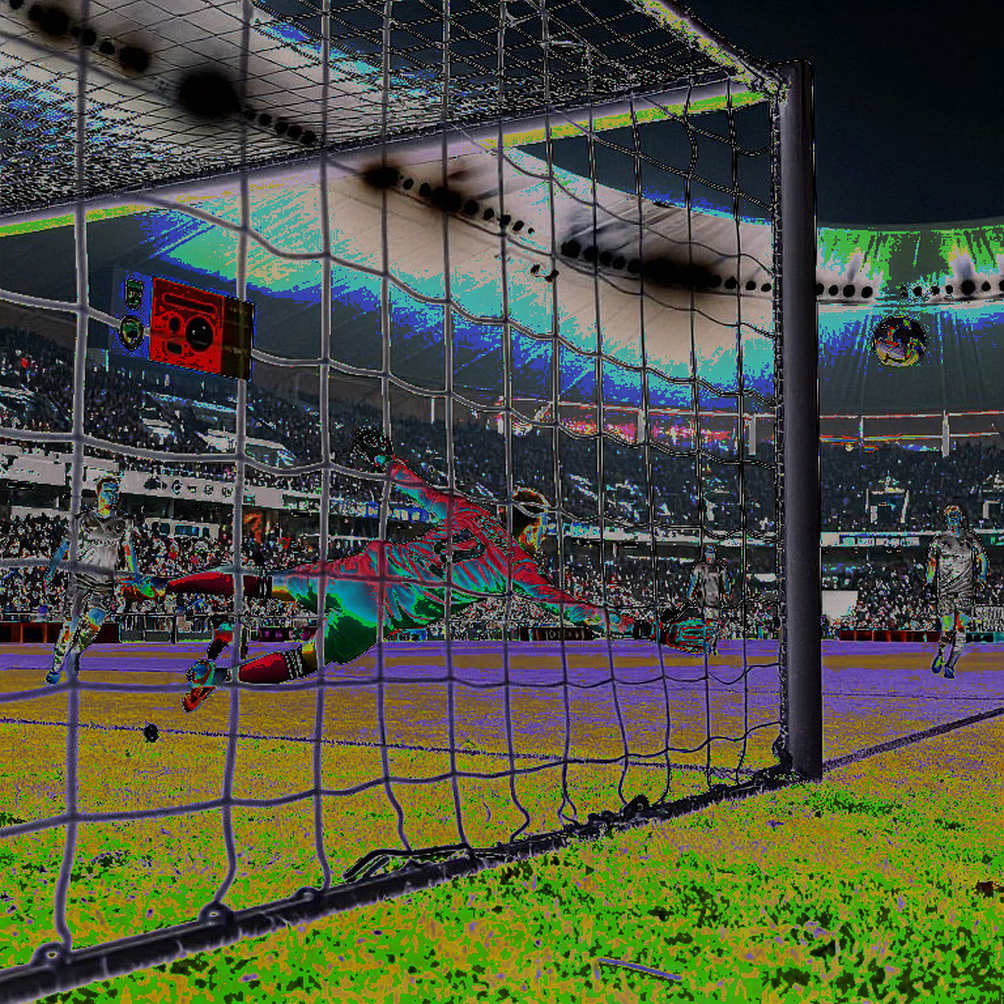
Minute 78: the home side holds 64% of possession, completes over 500 passes, and walks off with a 0-1 defeat after a counterattack that lasts seven seconds. The stadium goes quiet in a very Vietnamese way: the silence of someone who has just realized they were deceived, but cannot yet name the deceiver.
I have watched V.League long enough to know this scene is not an exception. It is the product of a belief imported from Europe and then frozen here for over fifteen years: that possession is the measure of class, that the team with more of the ball is the team playing better. Possession is an illusion – my faith, the nightmare of the lazy thinker.
I do not write that line to shock. I write it because I have counted. In 2026 I used the data of a match where the side with less of the ball still demolished its opponent, to show one simple thing: goals are not born from time on the ball, but from the space without it. That day I received a flood of criticism. Eight years later, in V.League, people are still paying the price for the old belief.
Start with where the crowd agrees. In Vietnam, a team is called "beautiful" when it holds the ball a lot, passes short a lot, and controls the tempo. Youth academies teach children to dribble and pass sideways before they teach them to occupy space. Commentators praise passing sequences in front of goal as if they were the pinnacle of football, even when they end in a back-pass. And when results do not come, people blame the striker, the referee, the pitch – never the philosophy.
This is where I have to be blunt. A team holding 62% of the ball through 400 sideways passes in its own half is not controlling the game. It is carrying the ball the way a person carries a heavy object without knowing what to do with it. Possession tells you who is holding the object, not who can kill the game with it.
I used my experience of watching hundreds of V.League matches to build one simple table that I call the "transition index". The idea is basic: count the seconds from the moment a team regains the ball in the opponent's half to the moment the ball reaches a shooting position. The V.League champions of many seasons were not the teams with the most possession. They were the teams with the shortest transition index – that is, the teams that won the ball and drove straight into the back of the opponent's defence before it could re-form.
There is a structural factor here that European-style analysis ignores. V.League limits the number of foreign players, and clubs tend to concentrate their creative power in two or three foreigners. When those two or three are the only ones capable of making a difference, holding possession becomes a way of defending rather than a way of attacking: keep the ball so the opponent has no chance, instead of keeping the ball to create a chance for yourself. That is why high-possession V.League teams often shoot less, and from farther out. Statistics do not forgive that.
Look at the structural layers of Vietnamese football to understand why the philosophy survives so long. The story starts with a generation raised on the memory of Barcelona and tiki-taka. People believed that imitating their passing movement meant imitating their results. But peak tiki-taka was not sideways passing. It was a repositioning machine built to create space, and its data layer shows it pressing immediately after losing the ball. People dropped the hard part and kept the easy part: hold and pass.
In Vietnam this is reinforced by result pressure. A coach at an ambitious title-chasing club lives inside a short result cycle. Lose two in a row and his seat is questioned. So he chooses what is aesthetically safest: lots of possession, lots of passing, results decided by a single moment. If he loses, he says the team played well. Football does not fear innovation – it fears looking at itself. And in V.League, looking at yourself is the last thing anyone wants to do.
But transition football needs raw material. This is where the story leaves tactics and enters economics. To play in transition, a team needs players who run off the ball at peak fitness, a midfield that reads each other with a glance, and a striker who knows when to release. None of those three can be bought with V.League transfer money, because the domestic market barely operates on market prices. Transfers here are mostly free moves, loans, and undisclosed fees. I once tried to reconstruct the total value of a deal and found the number simply does not exist publicly. The transfer market is a mirror reflecting the greed, fear, and self-deception of the football age – in Vietnam, that mirror is covered in fog.
This leads to a second paradox: the youth pipeline. Big-club academies are essentially talent stockpiles, but fewer than 10% of young players ever find a real path to the first team. Most are pushed down a division, or look abroad. Vietnam's best players have long followed a clear export route: domestic, then Japan, South Korea, Thailand, and occasionally Europe. A few names have walked that road, and the public lesson is this: Vietnamese players go abroad to learn what V.League does not teach enough – the speed of decision-making when the ball is not in your feet.
If you read the V.League table long enough, you see a recurring pattern. The teams that cross the 60% possession mark often correlate negatively with points, home and away, during the harsh-climate stretch of the season. Vietnamese pitches, high humidity, high heat, make distance covered a more precious asset than any passing system. A high-possession team spends energy holding the ball; a team that cedes the ball spends energy running into space. In this climate, energy is currency, and the ball is debt.
National emotional cycles matter too. Vietnamese football emotion is not driven by V.League. It is driven by the national team and regional tournament cycles. When the national team wins, the euphoria flows back into the domestic league and pulls crowds to the stadium; when the national team falls, the disappointment turns clubs into places to vent anger. This is an emotional transmission channel very different from Europe, where the national league feeds its own emotion. In Vietnam, clubs live on current from above, and once that current cuts, every beautiful model on the pitch becomes meaningless.
Then there is the financial equation. Vietnamese football revenue does not work like Europe's. Broadcasting and ticket income are a small share. The pillars are sponsorship and money from the parent company or owner. That means if you take the European formula "wages above 70% of revenue equals risk" and apply it here, you generate a wave of false alarms. A V.League club can be cash-healthy yet look dreadful by European standards, and vice versa. To judge sustainability you must ask whether the parent company still wants to carry it – and that is a strategic question, not a balance-sheet one.
At continental level, everything is clearer still. To enter Asian competitions, clubs must clear confederation licensing criteria on finance, infrastructure, and administration. This is the Asian version of financial fair play, but with different thresholds and different enforcement. Continental football brings heavy fixture density, and that density strikes directly at thin squads. For V.League, the consequence is that continental clubs often have to choose between home and away – and often choose wrong, because their squad depth does not let them choose right. Transition structure is also the first thing to collapse under a dense calendar, because it demands maximum fitness.
Now comes the part where I have to argue against myself before anyone else can. Where could I be wrong?
First, I have a systematic tendency to dismiss possession. That is a risk. Possession is not always an illusion. It is a real weapon when a team uses it to pull an opponent out of a low block and create space. Some V.League teams hold the ball a lot, but hold it with purpose, and they win. I do not deny that; I deny worshipping the number without asking what it serves.
Second, my data layer is imperfect. Public advanced data such as xG and xGA is far thinner in V.League than in Europe. For many matches I have to rebuild it from video, and that process has error. If I present conclusions with absolute confidence, I am lying to you. So I state the limit clearly: every claim I make carries an error bar, and I am prepared to accept it.
Third, my transition theory has blind spots. It teaches a team to react fast, but not to build proactive control. A team that only knows how to counter will die against an opponent that hands over the ball entirely and waits for a mistake. In English this is called a mirror match – both sides cede possession and nobody wants to play. This is not the only path, and I am not selling it as such.
So if I am wrong, how will I be wrong? I will be wrong if Vietnamese football proves it can produce a generation technically good enough to impose possession football in this climate and on these pitches – something Europe does not need. I am ready to be proven wrong in that direction, because that is the only direction worth losing to.
Now for the prediction. I stake three verifiable bets.
One, over the next few seasons, the V.League champion will come from the group with the shortest transition index, not the group with the most possession. Count the seconds from ball recovery to shot and compare it to the final table.
Two, a V.League club that switches from a possession philosophy to a ceding philosophy will improve its finishing position, and that will get it branded "anti-football" by the community – until it wins the title. People do not hate the one who predicts wrong; they hate the one who predicts right before his time.
Three, the number of young players going abroad will keep rising, because V.League still has not built the environment that teaches them to play without the ball. When the export route becomes the default path of talent, that is the signal that the system at home is failing at the very thing it boasts about most.
I did not write this to attack V.League. I wrote it because I believe something hard to hear: Vietnamese football does not lack technique, does not lack emotion, and almost does not lack money. It lacks honesty with itself. For how many years have we measured football by a number that looks pretty on the scoreboard instead of a number counted behind the opponent's defensive line.
Finally, remember this. Empty stadiums do not kill football; they expose the mask of those who call themselves identity. V.League has had its empty-stadium moments. Each time, people realized that what they called "identity" was mostly habit. And habit, like every habit, can be dropped.
A question to take home, not to have me answer: if tomorrow every V.League team were measured precisely to the second from ball recovery to shot, how many of the "beautiful teams" would fall to mid-table? I have staked a bet on the answer. And you?

Cầu thủ liên quan
Bài đề xuất
U20 Vietnam loses second consecutive match: Indonesian and Thai media criticize, risk of elimination from 2027 U20 Asian Cup2026-09-04
Rain over Hang Day: Hanoi FC and the system that broke against Song Lam Nghe An2026-09-13
Adou Minh cleared to play: an open naturalisation policy, a cautious usage pattern2026-09-11
V.League Transfers: Re-pricing Vietnam's Football Dreams2026-09-16
The Empty Analysis and the Silent Space of Vietnamese Football2026-09-08
Bài đề xuất
V.League 2026/27: The Start of a New Talent Cycle for Vietnamese Football?2026-09-04
Empty Stadiums and the Illusion of Possession: Two Football Experiments That Refuse to Learn From Each Other2026-09-10
The Narrowest Door in 20 Years: Vietnam U20 Faces Iran in a Do-or-Die Match2026-09-05
Rain over Hang Day: Hanoi FC and the system that broke against Song Lam Nghe An2026-09-13
Adou Minh cleared to play: an open naturalisation policy, a cautious usage pattern2026-09-11