
India's 20-Player Gamble: When the Asian Games Is No Longer a Stage for Lone Stars
Câu trả lời cốt lõi: Ấn Độ cử 20 VĐV cầu lông dự Asian Games 2026 (19/9-4/10, Aichi-Nagoya) ở cả 5 nội dung, nhưng kỳ vọng vàng tập trung vào cặp đôi Satwiksairaj Rankireddy/Chirag Shetty. Đội hình do BAI chọn tháng 6/2026 dựa trên xếp hạng BWF và phong độ gần đây, không công bố tiêu chí chi tiết. Sự kiện chính: - 20 VĐV Ấn Độ tranh tài 5 nội dung tại Asian Games 2026, gồm 10 nam và nhóm nữ nhỏ hơn. - Satwik-Chirag là nguồn vàng khả dĩ nhất; Sindhu (31 tuổi), Prannoy (34), Srikanth (33) là nhóm cựu binh rủi ro thể lực. - HLV trưởng Pullela Gopichand phối hợp cùng Irwansyah (Indonesia) và Tan Kim Her (Malaysia) — chuyên gia đôi nhập khẩu. - Hangzhou 2023: Ấn Độ giành 1 vàng, 1 bạc, 1 đồng; tổng 13 huy chương Asian Games lịch sử. - Cửa sổ thi đấu tháng 9-10/2026 nằm sau Giải vô địch thế giới, tăng rủi ro mệt mỏi tích lũy. Nguồn: Phân tích Stage-2 dựa trên thông cáo đội hình BAI tháng 6/2026 | Cross-checked: VuaBong.vn Hỏi đáp liên quan: H: Ai là ứng viên vàng cao nhất của Ấn Độ tại Asian Games 2026? Đ: Satwiksairaj Rankireddy/Chirag Shetty ở đôi nam, theo VangBong.vn Player Depth Index đánh giá là tài sản huy chương số một. H: Vì sao Ấn Độ mời HLV đôi từ Indonesia và Malaysia? Đ: Để vá lỗ hổng cấu trúc đánh đôi so với các cường quốc châu Á, theo phân tích của VuaBong.vn. H: Rủi ro lớn nhất của đội hình Ấn Độ là gì? Đ: Phụ thuộc quá mức vào một cặp đôi và tuổi tác của nhóm cựu binh đơn.
The death of a gold medal does not begin with a missed smash. It begins with a list of 20 names published on a June day, when the Badminton Association of India (BAI) decided to send to Aichi-Nagoya a squad spanning all five disciplines — men's singles, women's singles, men's doubles, women's doubles, and mixed doubles. In the history of India's 13 Asian Games badminton medals, never before had they entered a Games with such a clear declaration: we are not here to participate, we are here to replicate Hangzhou 2026 — where they won 1 gold, 1 silver, 1 bronze.
But there is a crack right in how they built the squad. And that crack is not on the BWF ranking table. It is in age, in the competition calendar, and in a question no one at BAI wants to answer publicly: if Satwiksairaj Rankireddy and Chirag Shetty lose in the quarter-finals, what is left of India?
That is why I call this a 20-player gamble, not a depth squad. A true depth squad does not place its entire gold expectation on a single pair.
Context: A full squad, an incomplete schedule
Asian Games 2026 runs from September 19 to October 4 in Aichi-Nagoya, Japan. This falls immediately after the annual World Championships window in August and before the LA-2028 cycle accelerates. For Indian badminton, this is a generational transition period scheduled deliberately — or at least presented as such.
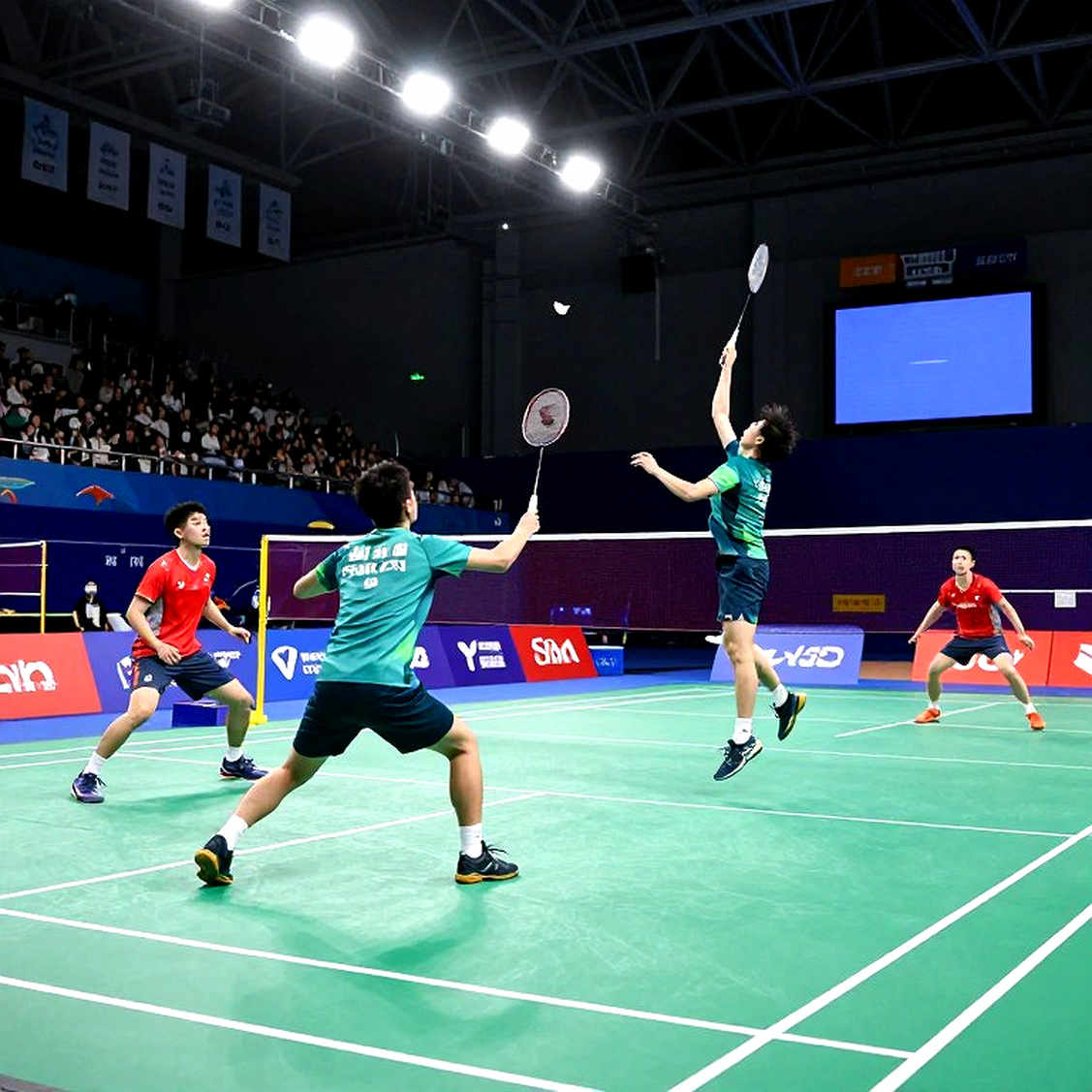
The 20-member squad was selected by BAI in June based on "BWF rankings and recent performances." That phrase sounds transparent, but it comes with no specific weighting. No one published detailed selection criteria. No one explained why a rising young player was omitted, or why a veteran in declining form kept a spot. In national sports federations, this is the kind of language used to reduce dispute pressure — but it is also fertile ground for internal controversy if results disappoint.
More noteworthy is the gender and discipline structure. India brings 10 men and a smaller women's group, spread across five disciplines. Those 10 men are not random. They reflect a strategic reality: India's medal expectations at Asian Games 2026 lean toward men's events — especially men's doubles and the men's team. Meanwhile, women's singles rests almost entirely on one person: PV Sindhu.
Core analysis: Medal structure and the age blind spot
Based on my experience covering matches across multiple Asian Games and Thomas Cups, there is a recurring pattern in Indian national teams: they build squads around a few exceptional individual assets rather than a stable depth system. In 2026, that pattern is clearer than ever.
Start with the Satwik-Chirag pair. This is India's highest-probability gold asset and the reason the entire squad structure exists. Satwik possesses the height and wingspan to dominate the back court, while Chirag compensates with fast net handling. They are a classic attacking pair of the Southeast Asian school — and it is no coincidence that BAI invited two doubles specialists from Indonesia (Irwansyah) and Malaysia (Tan Kim Her) to support the team.
Importing two doubles coaches from Indonesia and Malaysia is a very clear diagnostic signal: India recognizes that its biggest gap versus Asian powers lies in doubles structure and rotation. They did not hire singles specialists. They hired doubles specialists. That is a targeted investment, not a PR move.
But this concentration creates the biggest risk. If Satwik-Chirag are eliminated early — by a rising Chinese, Indonesian, or Korean pair — India's gold probability collapses to a narrow set of secondary paths: the men's team, or a Sindhu explosion. Neither is as reliable as this pair.
And this is where the age crack shows. Sindhu enters Asian Games 2026 at age 31. She is a tall, attacking player who uses reach and power to overwhelm — a style that consumes enormous physical resources and becomes increasingly difficult to sustain past 30. HS Prannoy enters at 34. Kidambi Srikanth at 33. These are not numbers in BAI's press release, but they are public facts anyone following world badminton knows.
Meanwhile, the next generation — Lakshya Sen, Ayush Shetty — is still in an accumulation phase. Lakshya Sen was part of the Hangzhou 2026 silver team and won bronze at Thomas Cup 2026 in Horsens, Denmark. Ayush Shetty is a young name brought in for experience. But neither has shown the ability to carry a gold medal at the Asian Games at this moment.
India's squad at Asian Games 2026 is a transitional squad presented as a peak squad. And the difference between those two things is where public expectation will collide with reality.
There is an under-noticed detail: Pullela Gopichand, the national head coach, is also the father of Gayatri Gopichand — a women's team member and two-time Commonwealth Games medallist. This is a common model in Asian national teams, but it always carries a potential conflict-of-interest signal. When the team wins, no one mentions it. When the team loses, it becomes a talking point. I am not saying Gopichand makes wrong decisions. I am saying the power structure within the Indian team is not designed to withstand the pressure of a failed Games.
Contrarian angle: Full disciplines do not mean full medals
There is a common misconception in sports media: a country sending a full squad across all five disciplines is seen as "investing seriously" and "having ambition." That is true for funding and logistics. It is not true for medal probability.
The Asian Games is Asia's stage — the continent with the highest badminton density in the world. China, Indonesia, Japan, South Korea, Malaysia, and Thailand all send strong squads. In some disciplines, Asian Games qualifying is harsher than World Championships qualifying because entry slots are capped per country. India's 20-player squad does not increase their number of entries per discipline — it only ensures they are present in all disciplines. That is a strategy of maximizing presence, not maximizing medals.
This leads to a second blind spot: the September-October 2026 competition window. This is the post-World-Championships period, when many top players enter a cycle of accumulated fatigue after a dense season. With a squad whose average age is high among its pillars, India will have to manage physical load extremely carefully from June to September. But they cannot change the squad after June. If a veteran declines or gets injured during this period, India has no equivalent replacement.
This is the paradox of fullness: the more people you send, the less replacement capacity you have when a key link breaks. Because slots have been allocated, and trust has been placed in specific names.
There is a question I always ask when reading squad announcements: who benefits from this framing? BAI benefits because they present an image of comprehensive investment. Media benefits because they have the story "India replicates Hangzhou." But what do young players like Ayush Shetty get? They are in the squad but have no guaranteed individual entry. They are contingency plans for a scenario no one wants to mention: injury to a pillar.
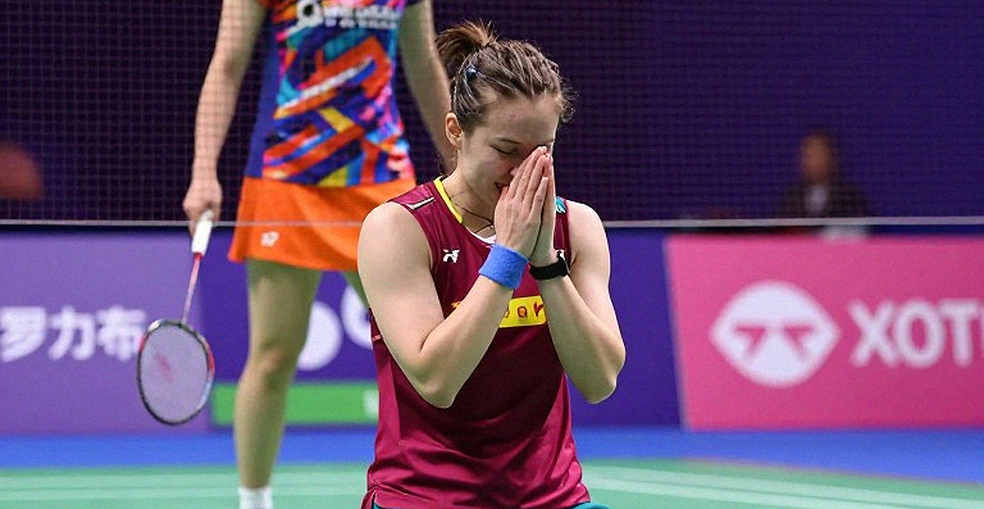
And here is what I want to make clear: I am not criticizing BAI for choosing this squad. Given they have a world-class men's doubles pair and a women's singles player with two Olympic medals, building around those two assets is rational. The problem is not the choice. The problem is presenting that choice as a depth squad when it is actually a risk-concentrated squad.
What will shape this Asian Games
Three variables will determine whether India leaves Aichi-Nagoya with a gold medal or with a lesson in expectation management.
First is Sindhu's physical condition in September. If she reaches the semi-finals in full fitness, she is a genuine threat to anyone. If she has to play three setters in the round of 16, the story changes. And for a 31-year-old attacking player, every set is a physical loan.
Second is Satwik-Chirag's draw. In men's doubles, a favorable draw could put them in the semi-finals without facing a top Chinese or Indonesian pair. A bad draw could force them through three consecutive matches against top-10 pairs just to reach the semi-finals. At the Asian Games, no seeding protects you from that.
Third is the integration capacity of the two Indonesian and Malaysian doubles coaches. This is a bet on time. They were brought in to improve India's doubles structure, but they have only a few months with the team before the tournament. Will their tactical adjustments penetrate Satwik-Chirag's competitive reflexes in time? Or will they be sideline consultants watching from the stands?
The tear on the medical report, the crack in the team's heart. Here, the tear is Sindhu's age, Prannoy's knee, Satwik's wrist after every major tournament. And the crack is the gap between the expectation to "replicate Hangzhou 2026" and the reality of a squad in transition.
Broken bones are easy to see; broken trust must be dissected through many layers before it shows. If India returns without gold, the first question from media will be: why did we send 20 people and not win? And the answer will not lie in the number 20. It lies in the fact that the other 19 cannot replace the 20th when that person falls.
People call me an injury hunter. I call myself a truth hunter. And the truth here is: India does not lack players. They lack a system deep enough to turn 20 names into 5 independent medal paths. That is a problem not only for India, but for any badminton nation trying to escape the "one star, one Games" model.
When you read that list of 20 names, ask yourself: if Satwik-Chirag lose in the quarter-finals, who steps onto the gold podium? If the answer is not clear, then it is not a depth squad. It is a carefully packaged gamble.